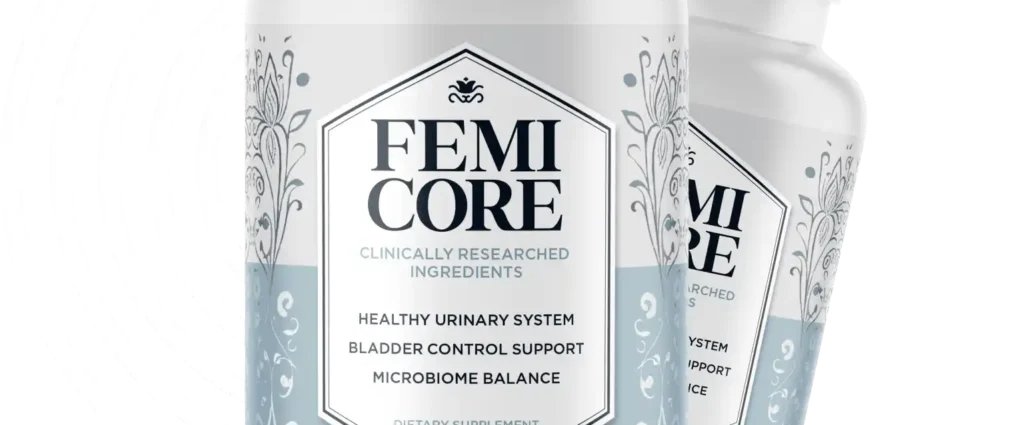
FemiCore Review :If you’ve been following my FemiCore journey, you know that after a month of consistent use, I experienced real improvements—fewer nighttime bathroom trips, less daytime urgency, and the return of confidence I thought I’d lost for good. But like anyone taking a supplement, I eventually found myself wondering: Is this actually working, or is it all in my head?
So I decided to run an experiment. I stopped taking FemiCore for a full week to see what would happen. Here’s the honest, unfiltered account of what I experienced—the good, the not-so-good, and what it taught me about this supplement.
Why I Decided to Stop
After finishing my first 30-day supply, I felt great. My bladder felt more stable than it had in years. I wasn’t waking up multiple times a night. The sudden urgency that used to control my life had become a distant memory.
But a nagging thought kept creeping in: Is this really the supplement, or did my body just heal itself naturally over time? I knew the only way to find out was to stop taking it and see what happened.
So I did. Cold turkey. One week without FemiCore.
Day 1-2: The “Everything’s Fine” Phase
The first two days were uneventful. I felt exactly the same as I had while taking the supplement. No noticeable changes. No sudden return of symptoms.
I actually felt a little smug. See? I told myself. Maybe I didn’t even need this stuff after all.
What I didn’t realize at the time was that FemiCore is designed to support long-term bladder stability by rebalancing the urinary microbiome. The probiotics and botanicals work gradually to restore a healthier internal environment. Stopping abruptly doesn’t cause immediate withdrawal—but the underlying support system slowly begins to fade.

Day 3-4: The Subtle Shift
By day three, I noticed something small but significant. The mild, nagging sensation I used to feel—that low-grade awareness of my bladder that made me feel like I always had to go—started creeping back.
It wasn’t dramatic. I wasn’t running to the bathroom every hour. But I noticed I was thinking about it more. That quiet confidence I’d built over the past month? It was starting to crack just a little.
By day four, I woke up twice during the night. Not a crisis, but definitely a step backward from where I’d been. For the first time in weeks, I felt that familiar frustration creeping in.
Day 5-7: The Return of Old Patterns
This is where things got real.
By day five, the urgency started coming back. Not the severe, panic-inducing urgency I’d experienced before—but enough to remind me why I’d started taking FemiCore in the first place. I caught myself mentally mapping bathroom locations again. That old anxiety was quietly returning.
By day six and seven, the pattern was clear. I was:
- Waking up 2-3 times per night again (compared to 0-1 while on FemiCore)
- Feeling that sudden urgency during the day
- Experiencing mild leaks during exercise
- Feeling less confident and more anxious overall
The most telling sign? I realized I was starting to avoid certain activities again. That jog with my friend? I was thinking about canceling. The long car ride I had planned? I was already figuring out the rest stop schedule.
What This Experience Taught Me
This week-long experiment confirmed something important: FemiCore was genuinely making a difference for me.
The gradual return of my symptoms wasn’t placebo. It wasn’t coincidence. It was my body telling me that the support FemiCore provided—the probiotic balance, the botanical support for bladder function—was something it had come to rely on.
Here’s what I learned:
| Aspect | On FemiCore (After 30 Days) | One Week Off |
|---|---|---|
| Nighttime bathroom trips | 0-1 per night | 2-3 per night |
| Daytime urgency | Mild, manageable | Returning, noticeable |
| Leaks during exercise | Rare | Occasional |
| Overall confidence | High | Declining |
| Mental “bathroom mapping” | Minimal | Increasing |
The Science Behind What I Experienced
Looking back, this makes sense. FemiCore isn’t a quick-fix drug that masks symptoms temporarily. It’s a supplement designed to support the urinary microbiome—the community of bacteria in the urinary tract that plays a key role in bladder health.
When that microbiome becomes imbalanced—potentially due to factors like aging, hormonal changes, or environmental toxins—it can lead to bladder overactivity, sudden urges, and leaks. FemiCore works by supporting healthy bacterial growth and helping restore balance over time.
When I stopped taking it, that support system was removed. The beneficial bacteria weren’t being actively supported anymore. And gradually, the old imbalances started to reassert themselves.
The Good News
Here’s the silver lining: the effects weren’t instantaneously gone. Even after a full week off, I wasn’t back to where I started. The improvements I’d made over 30 days didn’t vanish overnight. The microbiome support FemiCore provided had created lasting benefits that didn’t completely disappear the moment I stopped.
But the trend was clear. Without consistent support, those improvements were slowly eroding.
My Decision Moving Forward
After this experiment, I made a clear decision: I’m going back on FemiCore.
I learned that for me, this supplement provides genuine, meaningful support for my bladder health. The improvements I experienced weren’t imaginary—they were real, measurable, and noticeably diminished when I stopped.
The manufacturer recommends using FemiCore consistently for at least 90 days to allow the probiotic strains to colonize and restore healthy microbiome balance. Now I understand why. This isn’t a product that works overnight, and it’s not one that provides permanent results after a single bottle. It’s a daily support supplement that works best when used consistently.
Final Thoughts
If you’re considering FemiCore or already using it, here’s my advice:
Don’t expect instant miracles. This is a gradual supplement that works over time. The benefits build slowly and require consistency.
Don’t stop abruptly and assume everything will stay the same. As I learned the hard way, the support FemiCore provides is real—and when you remove it, your body may gradually return to its old patterns.
Do give it a fair chance. If you’re going to try it, commit to at least 30-60 days of consistent use. That’s what it takes to see real results.
Do manage your expectations. Individual results vary depending on age, lifestyle, diet, and health conditions. FemiCore isn’t a cure—it’s support. And for many of us, that support makes all the difference.
Disclaimer: This is my personal experience and should not be taken as medical advice. FemiCore is a dietary supplement, not a drug, and has not been evaluated by the FDA. It is not intended to diagnose, treat, cure, or prevent any disease. Always consult a qualified healthcare provider before starting or stopping any new supplement.