What Causes Brain Fog :Let me start with a question: Have you ever walked into a room and completely forgotten why you went there? Struggled to find a simple word in the middle of a conversation? Felt like your mind was wrapped in thick cotton wool, making even simple tasks feel exhausting?
If so, you’ve experienced brain fog. And you’re not alone.
I’ve dealt with this frustrating sensation myself, and I’ve seen countless patients describe the same experience. The good news? In most cases, brain fog is temporary and manageable. But to clear the fog, you first need to understand what’s causing it.
What Exactly Is Brain Fog?
Let’s be clear: “brain fog” isn’t a medical diagnosis. It’s a term people use to describe a group of cognitive symptoms that affect how you think, remember, and concentrate . Think of it as your brain “buffering” like a video with a poor internet connection.
The medical community sometimes calls it cognitive dysfunction or cognitive impairment . It’s characterised by a constellation of symptoms that can include :
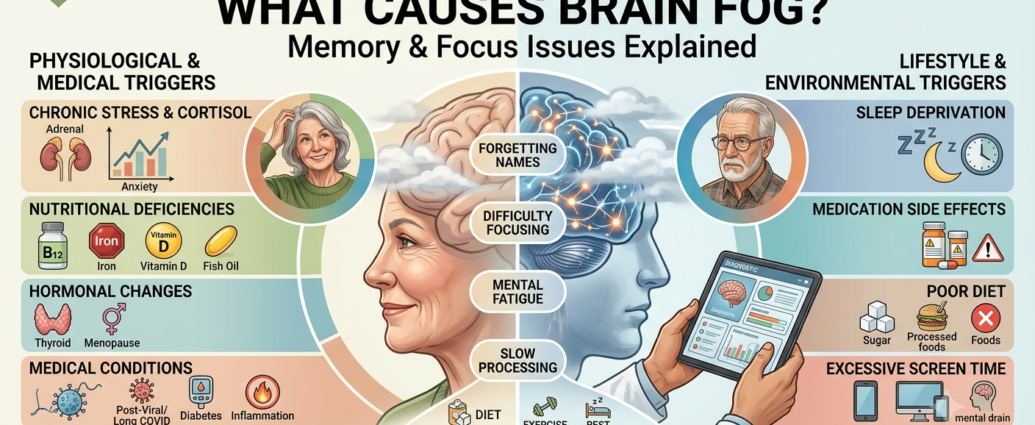
- Forgetfulness—Frequent memory lapses like forgetting names, appointments, or why you walked into a room
- Difficulty concentrating—Struggling to stay focused on tasks or conversations
- Mental slowness—Feeling like your thoughts are moving through treacle
- Word-finding problems—Knowing what you want to say but the word just won’t come
- Trouble planning and organising—Feeling overwhelmed by simple tasks
- Mental fatigue—Feeling drained even after light mental activity
Brain fog is common—more than 1 in 4 people will experience it at some point . It is not the same as dementia or delirium. While it can be frustrating, it’s usually temporary .
What Causes Brain Fog? The Common Triggers
Brain fog doesn’t come from nowhere. It’s usually a signal that something else is going on in your body or mind. Here are the most common triggers:
1. Stress, Anxiety, and Depression
Chronic stress floods your brain with cortisol, the stress hormone. Over time, this can affect the brain regions responsible for storing and recalling information .
Depression can disrupt the brain’s ability to focus, process, and access information . Stress and anxiety can also cause negative, preoccupying thoughts that keep you from being present and focusing on what’s in front of you . This creates a vicious cycle: you’re stressed about feeling foggy, which makes the fog worse.
In fact, brain fog is so closely linked to mental health that it can be both a symptom of conditions like depression or anxiety and a cause of further anxiety .
2. Poor Sleep
Sleep is essential for brain function. Research has linked cognitive decline with sleep problems, including :
- Sleeping less than the recommended seven to eight hours nightly
- Fragmented, poor-quality sleep
- Sleep disorders like insomnia and sleep apnea
When you’re tired, it’s harder to concentrate, think quickly, and remember information . Brain fog can also contribute to a cycle of poor sleep, making the problem worse .
3. Medical Conditions and Illnesses
Brain fog can be a symptom of numerous health conditions :
- Long COVID—Brain fog is a prominent symptom of long-COVID, affecting nearly 50% of patients in some studies. Cognitive impairments include confusion, short-term memory loss, and difficulty concentrating
- Hormonal changes—Menopause, pregnancy, and thyroid disorders can all trigger brain fog
- Autoimmune disorders—Conditions like multiple sclerosis, lupus, and fibromyalgia frequently involve cognitive impairment
- Chronic pain—Being in pain makes it harder to pay attention and think quickly
- Vitamin deficiencies—Lack of essential nutrients like vitamin D, omega-3s, magnesium, vitamin C, and B-complex vitamins may contribute
4. Diet and Nutrition
What you eat directly affects your brain. A poor-quality diet high in sugar, trans fats, and processed foods has been linked to increased systemic inflammation and neuroinflammation—which can cause brain fog .
Key dietary factors include:
- Anti-inflammatory diets (like the Mediterranean diet) can support brain health
- Western-style diets high in fat, sugar, and processed foods have negative effects
- Dehydration can impair brain function
- Vitamin deficiencies—particularly B vitamins, vitamins C, D, and E—can lead to neuroinflammation
5. Medications
Brain fog can be a common side effect of some medications. If you’re taking a new drug—prescription or over-the-counter—ask your doctor if it could be affecting your cognition . Chemotherapy, sometimes called “chemobrain,” is another well-known example .
6. Inflammation and the Gut-Brain Axis
Recent research has increasingly highlighted the roles of neuroinflammation and dysregulation of the gut-brain axis as key contributors to brain fog .
When microglia and astrocytes (brain cells) are activated by stress, trauma, or infection, they secrete reactive oxygen species and pro-inflammatory cytokines. These neuroinflammatory responses are believed to play significant roles in neurological symptoms, including brain fog .
7. Age-Related Changes
People often notice memory lapses beginning in their 50s or 60s. This is when age-related chemical and structural changes begin in brain regions devoted to memory, such as the hippocampus and frontal lobes. These brain regions begin to shrink, often related to narrowing of the small arteries that deliver oxygen and nutrients .
However, most memory glitches are part of normal aging and don’t necessarily indicate something more serious .
What the Research Reveals
A large study of 25,796 participants found that brain fog sufferers exhibited surprisingly homogenous symptoms and impairments. The four key dimensions identified were :
- Demographics—More common in females, average age around 35
- Symptoms—Difficulty focusing, concentrating, following conversations, and remembering appointments
- Comorbidities—COVID-19, migraines, concussions, anxiety, depression, and poor sleep
- Objective cognitive function—Slightly worse performance, particularly in cognitive flexibility
The researchers recommended that healthcare providers explore brain fog by taking a thorough history of migraine, COVID-19, concussion, and other treatable comorbidities .
How to Manage Brain Fog
The good news? There are proven ways to manage brain fog and improve your mental clarity:
Lifestyle Strategies
- Get enough sleep and rest—Aim for 7-8 hours of quality sleep nightly
- Manage stress—Try grounding techniques, mindfulness, and progressive muscle relaxation
- Exercise regularly—Physical activity supports brain health
- Eat a brain-healthy diet—Consider an anti-inflammatory diet rich in fruits, vegetables, whole grains, and omega-3s
- Stay hydrated—Dehydration can worsen cognitive symptoms
Cognitive Strategies
- Slow things down—If your processing speed is slow, take your time and go back over information if needed
- Use memory aids—Write important things down, use to-do lists, and set reminders on your phone
- Take regular breaks—Notice your energy patterns and work around them
- Switch up learning methods—Try audiobooks, diagrams, or mnemonics if reading feels challenging
When to See a Doctor
If brain fog symptoms won’t go away even with better sleep, a healthy diet, and stress management, consult your GP . They can determine the underlying cause and recommend appropriate treatment—especially if brain fog is interfering with your daily functioning .
Why Understanding Brain Fog Matters
Brain fog is more than just a frustrating feeling. It can affect your:
But understanding what’s causing your brain fog is the first step toward clearing it. Whether it’s stress, poor sleep, diet, an underlying medical condition, or simply the natural aging process, there are strategies to help you think more clearly and regain control of your cognitive function.
Your brain health matters. It deserves attention, care, and the best support available.
Disclaimer: I am not a medical professional. This article is for informational purposes only and does not constitute medical advice. Always consult a healthcare professional if you are concerned about your cognitive health or memory issues.
Read also
ProDentim Review: Does This “Candy” Actually Fix Bad Breath?
FlashBurn Reviews: My Honest Investigation After Seeing This Everywhere