GLP BodyGuard Review:If you’re one of the millions of Americans taking a GLP-1 medication like Ozempic or Wegovy, you’ve probably noticed something beyond the weight loss: you’re also losing muscle. According to KFF, about 12% of U.S. adults report currently taking a GLP-1 drug for weight loss, diabetes, or other conditions—a mainstream health trend that’s creating new challenges around preserving strength and lean mass .
That’s where GLP BodyGuard comes in. It’s an AI-powered habit-tracking system designed specifically for GLP-1 users, focusing on protein intake, workouts, recovery, and lean muscle preservation . But does it actually help, or is it just another wellness dashboard that looks good but does little?
Here’s what the data and product information reveal.
What Is GLP BodyGuard?
GLP BodyGuard is a web-based platform that helps GLP-1 users track the habits that matter most for preserving muscle while losing weight . Unlike generic fitness apps, it’s built around the specific challenge of GLP-1 use: appetite suppression that makes hitting protein targets difficult, and rapid weight loss that can accelerate lean-mass loss.
The system operates entirely online with no physical product or shipping. Users create an account on the official website, complete a digital checkout, and get instant access to the platform . Pricing includes:
- Free plan: $0 forever
- Premium Monthly: $9.99/month after a 14-day trial
- Premium Annual: $79/year after the 14-day trial
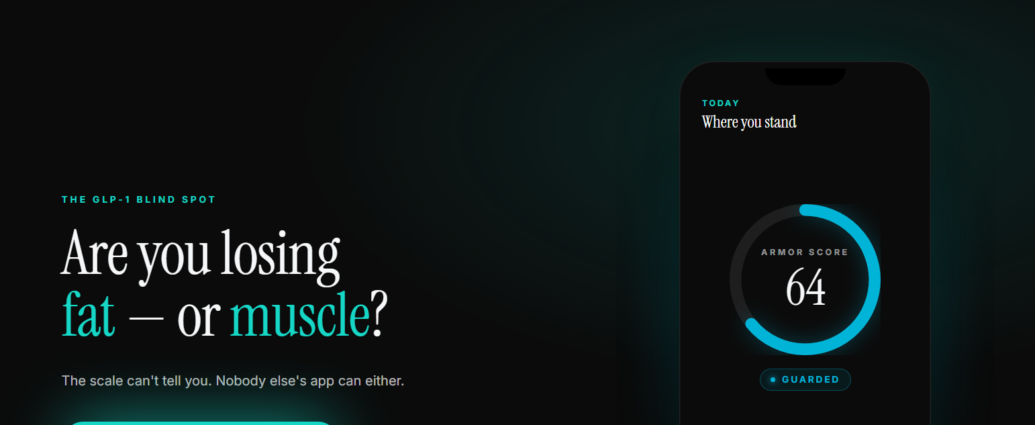
The core concept is straightforward: track protein, hydration, sleep, weight, and training consistently, and the platform provides feedback through its “Armor Score” —a 0–100 index designed to reflect how well you’re protecting your lean mass .
What the Platform Actually Does (And Doesn’t Do)
Here’s where the product’s marketing needs careful unpacking.
Misleading Belief #1: “GLP BodyGuard Automatically Protects Muscle”
This is the most common misunderstanding. The platform can help you track protein, show lean-mass trends, and nudge you toward resistance training—but it cannot eat enough protein for you, complete your workout, or stop lean-mass loss just by existing on your phone .
The product is a behavior dashboard, not a biological shield. It supports the habits connected to muscle preservation; it does not automatically preserve muscle. The distinction matters .
Misleading Belief #2: “Armor Score Is the Final Truth About My Body”
The Armor Score is an educational index based on tracked inputs like protein, sleep, training, adherence, and weight trends . It’s useful for identifying patterns—but it’s not blood work, a DEXA scan, or medical judgment.
The danger is false precision: a precise number feels more reliable than it actually is. A score dip might just reflect a travel day with bad logging habits, not a medical issue. Treat the Armor Score like a dashboard warning light—important, but not everything .
Misleading Belief #3: “Lean-Mass Tracking Means Exact Muscle Measurement”
GLP BodyGuard provides estimates, not exact measurements. Estimates can be useful—weather forecasts are estimates, and people still check them—but they are not proof .
Use these estimates alongside real-world signals: strength performance, waist measurements, energy levels, sleep quality, clothing fit, and progress photos. The app should complement your own observations, not replace them .

What Users Actually Need to Know
What It Can Do:
- Track protein intake and help you stay aware of targets
- Log weight, sleep, hydration, and training consistency
- Provide a structured dashboard with an Armor Score that reflects habit adherence
- Generate a Physician Summary Report for Premium members to share with clinicians
What It Cannot Do:
- Automatically preserve muscle just by being installed
- Provide exact lean-mass measurements
- Replace medical advice or clinical monitoring
- Keep you consistent without your own effort
The Real Key to Results:
Start with one habit. Protein. Not eleven habits. Not the whole perfect wellness routine. Just protein .
Create a minimum daily protein floor with guidance from a clinician or qualified nutrition professional. Use GLP BodyGuard to stay aware of that target. Once protein feels normal, add resistance-training tracking, then hydration, then recovery. Small layers, not chaos .
Safety and Practical Considerations
GLP BodyGuard is a wellness tool, not medical advice. The FDA has approved Wegovy for reducing cardiovascular risk alongside diet and exercise—a specific medical indication that a wellness dashboard should not be treated as equivalent to . The FDA also clarified in 2025 that semaglutide injection products were no longer in shortage, highlighting how fast the GLP-1 medication environment is changing .
As always, consult your healthcare provider before making significant changes to diet, exercise, or supplement routines—especially when taking prescription medications.
The Bottom Line
GLP BodyGuard appears to be a legitimate, well-structured tool for GLP-1 users who want more structure than just watching the scale go down . It’s not magic, not medical advice, and definitely not a push-button body transformation—but it can be genuinely useful for the right user .
Consider GLP BodyGuard if:
- You’re taking a GLP-1 medication and concerned about muscle preservation
- You want a structured way to track protein, training, and recovery
- You understand that the tool supports habits but doesn’t replace action
- You’re looking for a low-cost entry point (the free plan is $0 forever)
Proceed with caution if:
- You’re expecting automated muscle preservation without effort
- You’re looking for a product with FDA approval (it’s a wellness tool, not a medical device)
- You’re not willing to log habits consistently
GLP BodyGuard works best for people who treat it as a behavior dashboard and commit to consistent use—not for those expecting passive results. The free plan makes it a low-risk option to test for yourself .
Disclaimer: This article is for informational purposes only and does not constitute medical advice. Always consult a qualified healthcare professional before starting any new supplement regimen, diet, or exercise program, especially if you are taking prescription medications. Individual results may vary.