Pulsetto Review :You’ve probably seen the name popping up across wellness forums, social media feeds, and even in New York’s Times Square. Pulsetto. It’s one of the most talked-about stress-relief devices in the wellness space right now—and for good reason.
The concept is compelling. A small wearable device that you strap around your neck for four minutes. It sends gentle electrical pulses to your vagus nerve, supposedly “resetting” your nervous system and melting away stress . Over 300,000 users worldwide have tried it, and the company has grown from $9 million to over $40 million in revenue in just one year .
But does it actually work? Is it safe? And most importantly—is it right for you?
This review cuts through the marketing hype to give you a clear, honest look at Pulsetto. We’ll break down the science, examine the clinical data, look at what real users are saying, and—most critically—share a serious safety warning that every potential buyer needs to know.
What Is Pulsetto?
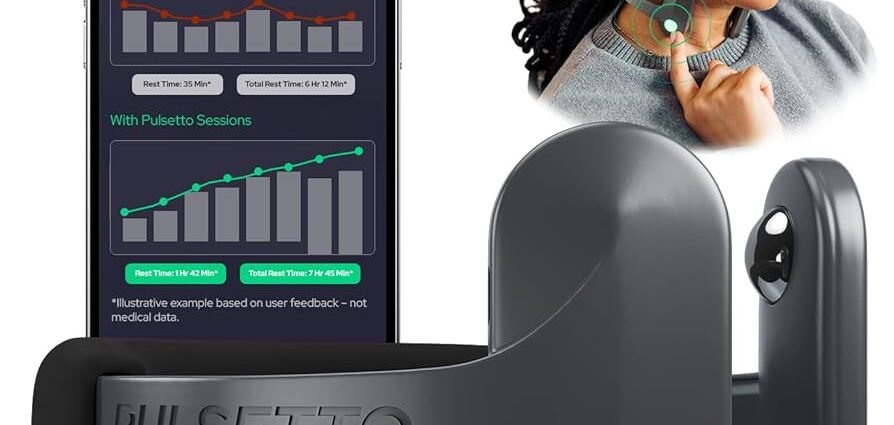
Pulsetto is a wearable device that delivers non-invasive vagus nerve stimulation (VNS) through a band placed at the neck . The device pairs with a free companion app on iOS and Android, offering five distinct stimulation modes: Stress, Sleep, Burnout, Pain Control, and Calming .
Each session takes just four minutes. You place the device around your neck, apply the included gel to the electrodes, select your mode in the app, and let the device work .
The company behind Pulsetto built the device around the well-established clinical connection between vagus nerve stimulation and the autonomic nervous system. VNS has been used in medical settings since the 1990s for treatment-resistant epilepsy and depression. Pulsetto brings a consumer-accessible version of that mechanism to the market .
How Pulsetto Works
The science behind Pulsetto is grounded in established research rather than speculative wellness marketing .
The vagus nerve is the longest nerve in the body. It runs from the brainstem through the neck and down through the chest and abdomen, connecting the brain to the heart, lungs, stomach, and intestines. It is the primary nerve of the parasympathetic nervous system—the system responsible for rest, recovery, and calm .
When the vagus nerve is functioning well, the body can move efficiently between states of alertness and calm. When vagal tone is low—which chronic stress, poor sleep, and burnout all produce—the nervous system gets stuck in sympathetic activation. The body stays in emergency mode even when there’s no emergency .
Pulsetto uses transcutaneous (external) vagus nerve stimulation. The device’s electrodes make contact with the skin of the neck where the vagus nerve runs, and gentle electrical pulses are delivered at frequencies calibrated for each specific mode .
What it feels like: Users describe the sensation as a pleasant, light vibration or tingling sensation in the neck area .

Clinical Data and Research
Pulsetto has invested significantly in clinical research to support its claims .
- 56% reduction in perceived stress
- 45% reduction in anxiety
- 41% improvement in sleep quality
- Over a four-week period with twice-daily use
Migraine Study :
A study following 20 participants who used the device daily for 40 minutes reported:
- Migraine frequency decreased by 40.35%
- Pain days dropped by 27.66%
- Pain intensity fell by 42.46%
- Mood improved by 13.89%
- Stress decreased by 20.29%
The researchers noted limitations: “In this small, open-label feasibility cohort… Larger randomized studies with longer follow-up and objective endpoints are required to confirm efficacy and assess long-term clinical relevance” .
Company Growth:
Pulsetto grew revenue from approximately $9 million in 2024 to more than $40 million in 2025, representing more than 4x year-over-year growth, while surpassing 300,000 users worldwide . The company has been recognized by Deloitte as a Company to Watch and included in the Deloitte Technology Fast program .
Product Models and Pricing
| Model | Price | Key Differences |
|---|---|---|
| Pulsetto Lite | $279 | 7 intensity levels, core programs |
| Pulsetto Fit | $296 | 9 intensity levels, expanded program library, refined design |
Additional Costs:
- The companion app is free with no mandatory subscription
- Premium subscription options are available for extra features: Monthly $17.99, 3 Months $44.99, 12 Months $99.99
- Replacement gel is an ongoing consumable cost
Payment Options:
Pulsetto has partnered with Truemed to allow qualified customers to use their Health Savings Account (HSA) or Flexible Spending Account (FSA) debit cards, potentially saving 30-40% .
Guarantee: The device comes with a 2-year warranty and a 30-day money-back guarantee .
⚠️ CRITICAL SAFETY WARNING: FDA Adverse Event Report
Before purchasing, every potential buyer needs to know about a serious safety issue reported to the FDA.
The FDA MAUDE Report :
On October 28, 2025, an adverse event was reported to the FDA involving a Pulsetto device. The report details:
Device Problems:
- Crack (1135)
- Melted (1385)
- Overheating of Device (1437)
Health Effect:
- Superficial (First Degree) Burn (2685)
Reporter’s Description:
“Using pulsetto vagus nerve stimulator heavily marketed on facebook and social media and game ads. First device flimsy and housing cracked open and exposed wiring and returned for replacement. On (b)(6) 2025, i was using replacement device and started charging it. The indicator light stopped flashing and i picked up device and burned my hand and noted the housing was melting. This device is poorly constructed and a fire and injury hazard” .
Key Details:
- 52-year-old male patient
- Reporting party was the patient (voluntary reporter)
- Date of event: October 28, 2025
- Device manufacturer: PULSETTO, 470 old worthington rd, ste 200, westerville OH 43082
This report is from a single user and does not necessarily indicate a widespread problem. However, it represents a serious safety concern that warrants attention, especially given the device is worn around the neck.
What Users Are Saying
Positive Reviews:
“Now, eight months in, the Pulsetto has undeniably given me so much of my life back. My chronic neck pain is manageable, my CCI symptoms are reduced, and vertigo is less frequent. While it’s not a magic bullet, it has been an essential tool in my journey toward better health and has truly transformed my sleep” .
“At first I was skeptical, but after the first week the results were pretty impressive..! I use it for sleep and cortisol reduction, 2′-3′ times per day! I’m loving it..!”
New York Post Review:
“It’s astonishingly user-friendly; I’m not tech-savvy but I had it all up and running in minutes. Apply the included gel, place the band around the neck, turn on the power button and start a session… right around your pulse—is pretty sensitive and rarely stimulated, so it’s a very unique experience” .
Mixed Feedback:
“I basically use it for pain and for the sleep programs that run on the app. At this point, I’m not sure what the pain results are. I haven’t had anything that basically says my pain is any better. But the sleep, I can say that I think it’s working out pretty good” .
Complaint:
“I hate it when I’m charged without asking and I find it a steal when you have paid good money for a product to have to pay apps so that it works” .
The company responded: “All core programs are free to use with your device. The Premium subscription is optional and only needed for extra features” .
Side Effects and Contraindications
- Application site discomfort, irritation, or redness
- Local pain in the face, head, or neck (including toothache)
- Muscle twitching or contractions (including facial droop or lip pull)
- Headache/migraine
- Dizziness
- Tingling or “pins and needles” feeling where the device is applied
These side effects typically resolve immediately after stimulation is complete .
Do NOT use Pulsetto if you have:
- Active implantable medical devices (pacemaker, hearing aid implant, any implanted electronic device)
- Metallic devices (stent, bone plate, bone screw) implanted at or near the neck
- Open wounds, rash, infection, swelling, cuts, sores, drug patches, or surgical scars on the neck
- Allergic reaction to nickel (Pulsetto electrodes contain nickel)
Safety and efficacy have NOT been evaluated in:
- Pregnant women
- Pediatric users
- People with active cancer or cancer in remission
- Users with uncontrolled hypertension, hypotension, bradycardia, or tachycardia
- Users with cardiac disease, arrhythmia, seizures, or history of head trauma
Do NOT use Pulsetto:
- While driving or operating machinery
- In explosive atmospheres or near flammable gas mixtures
- Near microwave machines, MRI, or CT machines
- If skin is wet (shower, bath, pool)
How to Use Pulsetto
Step 1: Apply a small amount of calming gel to the electrode pads on each side of the device. Position the device around the neck with the electrodes making contact with the skin on either side of the neck. It should sit comfortably at the base of the neck.
Step 2: Open the companion app and select your mode: Stress, Sleep, Burnout, Pain Control, or Calming. Set the intensity to a comfortable level—you should feel a mild tingling or buzzing sensation, but not discomfort.
Step 3: Start the session. Four minutes. Sit or lie down comfortably. The device operates hands-free once started.
Pro Tip: Use the device daily for cumulative benefit. The clinical data shows results after two weeks of consistent use. Vagal tone improvement requires repetition across sessions .
The company recommends starting at the lowest intensity level and gradually increasing it until you feel a light tingling sensation .
Should You Try Pulsetto?
Consider Pulsetto if:
- You struggle with chronic stress, anxiety, or poor sleep
- You’re interested in a non-invasive, drug-free approach to nervous system support
- You’re willing to use the device consistently (daily use is key for results)
- You have no contraindications (pacemaker, neck implants, nickel allergy, etc.)
Proceed with caution if:
- You have any of the contraindications listed above
- You’re expecting instant or dramatic results (effects typically build over weeks)
- You’re looking for a proven medical treatment (this is a wellness device, not a medical device)
- You’re concerned about the safety report (consider this before purchasing)
Your next step: If you’re curious about Pulsetto, visit the official website to learn more. Read the contraindications carefully. Review the FDA safety report and decide if you’re comfortable with the risk. And if you decide to try it, the 30-day guarantee means you can do so with some protection.
Conclusion
Pulsetto represents an interesting convergence of established neuroscience and consumer wellness technology. The science behind vagus nerve stimulation is legitimate, and the clinical data from the company shows promising results for stress reduction, anxiety relief, and sleep improvement.
The company’s rapid growth—from $9 million to over $40 million in revenue, with 300,000+ users—suggests that many people are finding value in the device . The recognition from Deloitte and the positive user reviews add to its credibility.
However, the FDA adverse event report is a significant concern that cannot be ignored. A device that sits against your neck should never crack, melt, or burn the user. While this may be an isolated incident, it’s a red flag that potential buyers must weigh carefully.
If you have no contraindications, understand that results take time and consistency, and are willing to accept the small but real safety risk, Pulsetto could be a valuable addition to your stress-management toolkit. For others, the risk may outweigh the reward.
FAQ Section
What does Pulsetto do?
Pulsetto is a wearable device that delivers gentle electrical stimulation to the vagus nerve to help reduce stress, improve sleep, and support nervous system recovery. Each session takes four minutes .
Does Pulsetto actually work?
Clinical data shows significant improvements: 56% reduction in perceived stress, 45% reduction in anxiety, and 41% improvement in sleep quality over four weeks of consistent use . Individual results vary.
Is Pulsetto safe?
The device is FCC and CE certified . However, an FDA adverse event report in October 2025 documented a device that cracked, overheated, and burned a user’s hand . Contraindications include pacemakers, neck implants, and nickel allergy .
How much does Pulsetto cost?
Pulsetto Lite costs $279 and Pulsetto Fit costs $296. Both are one-time purchases with no mandatory subscription . Premium app features are available with optional subscriptions starting at $17.99/month .
Does Pulsetto have a subscription?
No. The companion app and all core programs are free with the device. A Premium subscription is optional and provides additional features .
Who should not use Pulsetto?
People with pacemakers, hearing aid implants, or any implanted electronic devices; those with metallic implants in the neck; pregnant women; people with nickel allergies; and anyone with open wounds or rashes on the neck .